-(1920-x-420-px).png?w=1920&h=420)


Heart disease remains the number one killer in Malaysia, claiming 95,266 lives in 2022 alone, and the numbers are rising every year [1].

The rising trend is attributable to an ageing population and an increasing prevalence of risk factors such as hypertension, diabetes, and elevated cholesterol levels amid an increasingly overweight population [2]. What’s more alarming is that heart disease now affects younger adults in their late 20s and 30s [1].
Don’t be another statistic! Start monitoring your pulse pressure to protect your heart.
Why Pulse Pressure Matters More Than Blood Pressure

Pulse pressure is the difference between systolic and diastolic blood pressure, which is not the same as pulse rate or blood pressure readings. Pulse pressure reflects the stiffness of your arteries and your heart's pumping efficiency.
In fact, as little as a 10 mmHg increase in pulse pressure increases your cardiovascular disease risk by as much as 20% [3]. That makes it a better predictor of heart health than blood pressure readings alone.
Are You at Risk?
Check out our Pulse Pressure Chart!
A pulse pressure around 40mmHg is considered normal. If your pulse pressure is greater than 60mmHg, you could be at risk for heart disease and stroke, as it indicates increased arterial stiffness. A narrow pulse pressure (40mmHg and below) puts you at risk for issues such as heart failure, chronic fatigue, and shortness of breath.
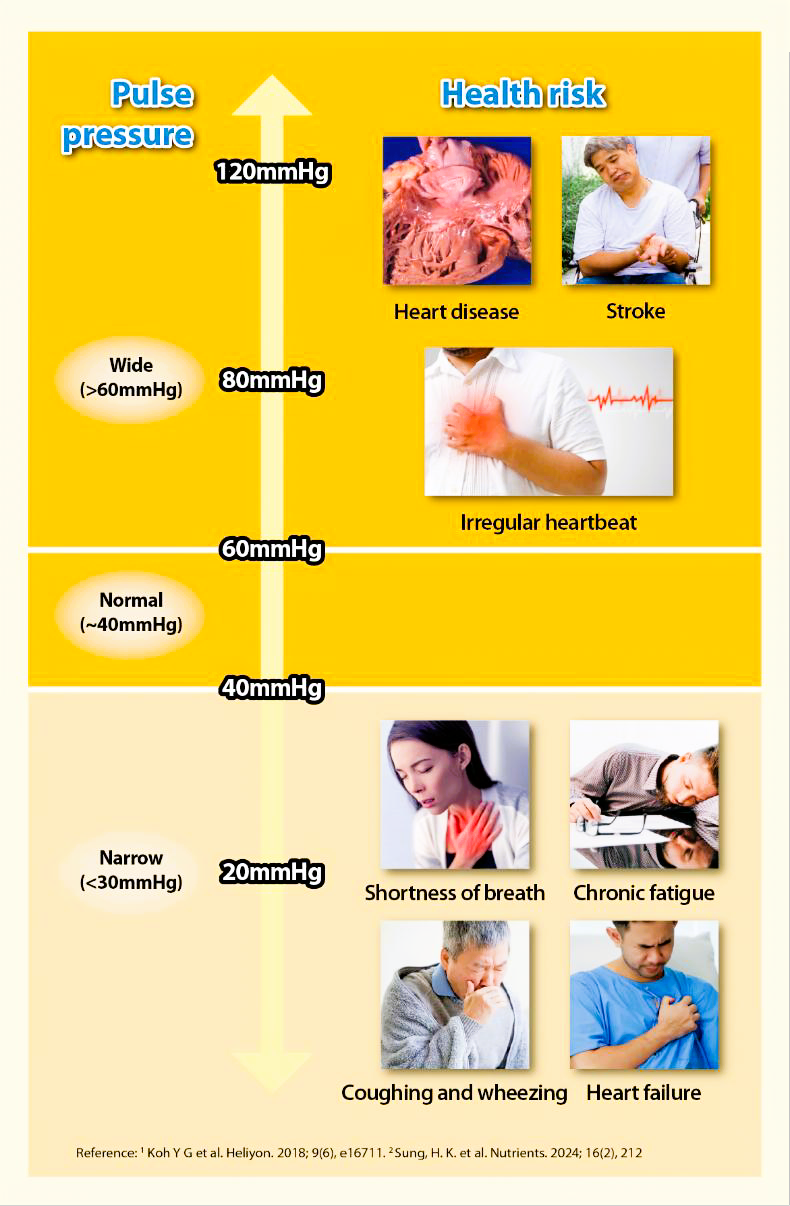
Don’t take any risks! Keep your heart strong and healthy by taking CoQ10 supplements.
What Is CoQ10?
Co-Enzyme Q10 (CoQ10), also known as ubiquinone, is a vitamin-like substance naturally found in almost every cell in the body. The highest levels are in the heart and liver.
- Our body naturally switches between ubiquinone and ubiquinol. Which is better? Clearly ubiquinone. It has strong clinical evidence for reducing cardiovascular death risk, unlike ubiquinol, which does not.
Why Is CoQ10 Important?

CoQ10 levels deplete with age, leading to a weakened heart, fatigue, poor stamina, lower immunity, and migraines. People taking statin drugs (cholesterol-lowering medications) tend to have lower CoQ10 levels.
CoQ10 Boosts Mitochondrial Function
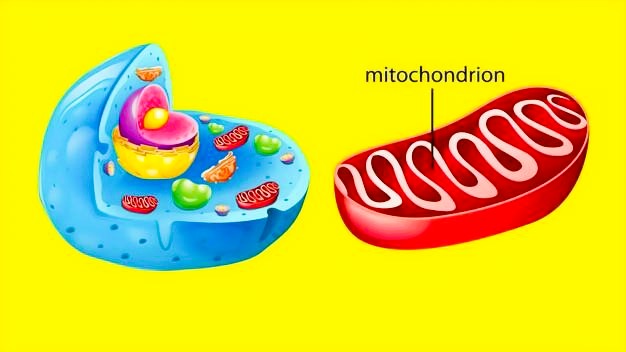
Mitochondria are known as the "powerhouses of the cell," responsible for producing the energy that you need daily [4].
Supplementation with CoQ10 helps improve mitochondrial function and offers antioxidant protection for energy-demanding organs like the heart.
How CoQ10 Combats Low Pulse Pressure
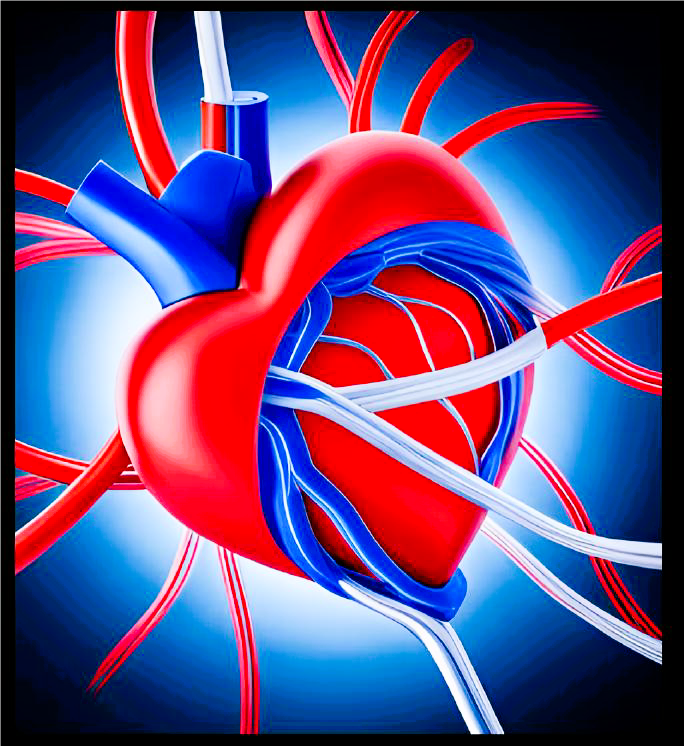
When your pulse pressure is low or narrow, it may indicate that your heart is damaged, scarred, or overstretched, which can lead to heart failure. CoQ10 helps resolve these issues and support cardiovascular health by promoting flexible arteries, healthy blood flow, and good circulation. It also acts as an antioxidant, which protects against damage caused by free radicals.
How to Select the Best CoQ10 for Your Needs
Not all CoQ10 are created equal. Choose CoQ10 supplements that contain 100% ubiquinone, as this is the preferred CoQ10 proven to prevent cardiovascular diseases and treat patients with heart failure [5]. Ubiquinone remains the best form of CoQ10, backed by extensive clinical research over the last 40 years.
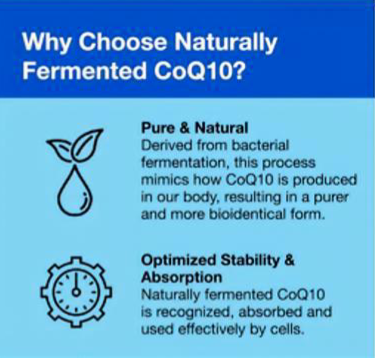
In addition, look for CoQ10 products that have been produced by a natural bacterial fermentation method.
This form closely mirrors the way CoQ10 is produced in our body, making it easily recognized, absorbed, and used by our cells [6].
Dosage is also important. Recent studies have shown that taking CoQ10 in divided doses (e.g., 60mg 3 times a day or 100mg twice a day) provides better results compared to a 200mg once-a-day dose [7].
Take Charge of Your Heart Health Today!

Keep your pulse pressure strong and enjoy a healthier heart for years to come with the right CoQ10 containing 100% ubiquinone!
…………………………………………………………………………………………………….……...........................................................
References:
[1] INTERACTIVE: Heart disease is top cause of early deaths in Malaysia | The Star
[2] Alarming increase in cardiovascular disease cases - Institut Jantung Negara
[3] https://www.ncbi.nlm.nih.gov/books/NBK482408/
[4] Mitochondria: Form, function, and disease
[5] Fladerer JP, Grollitsch S. Curr Cardiol Rep. 2023 Dec;25(12):1759-1767.
[6] Mantle D, Dybring A. Antioxidants (Basel). 2020 May 5;9(5):386.
Shukla S, Dubey KK. 3 Biotech. 2018 May;8(5):249.
…………………………………………………………………………………………………….……...........................................................